
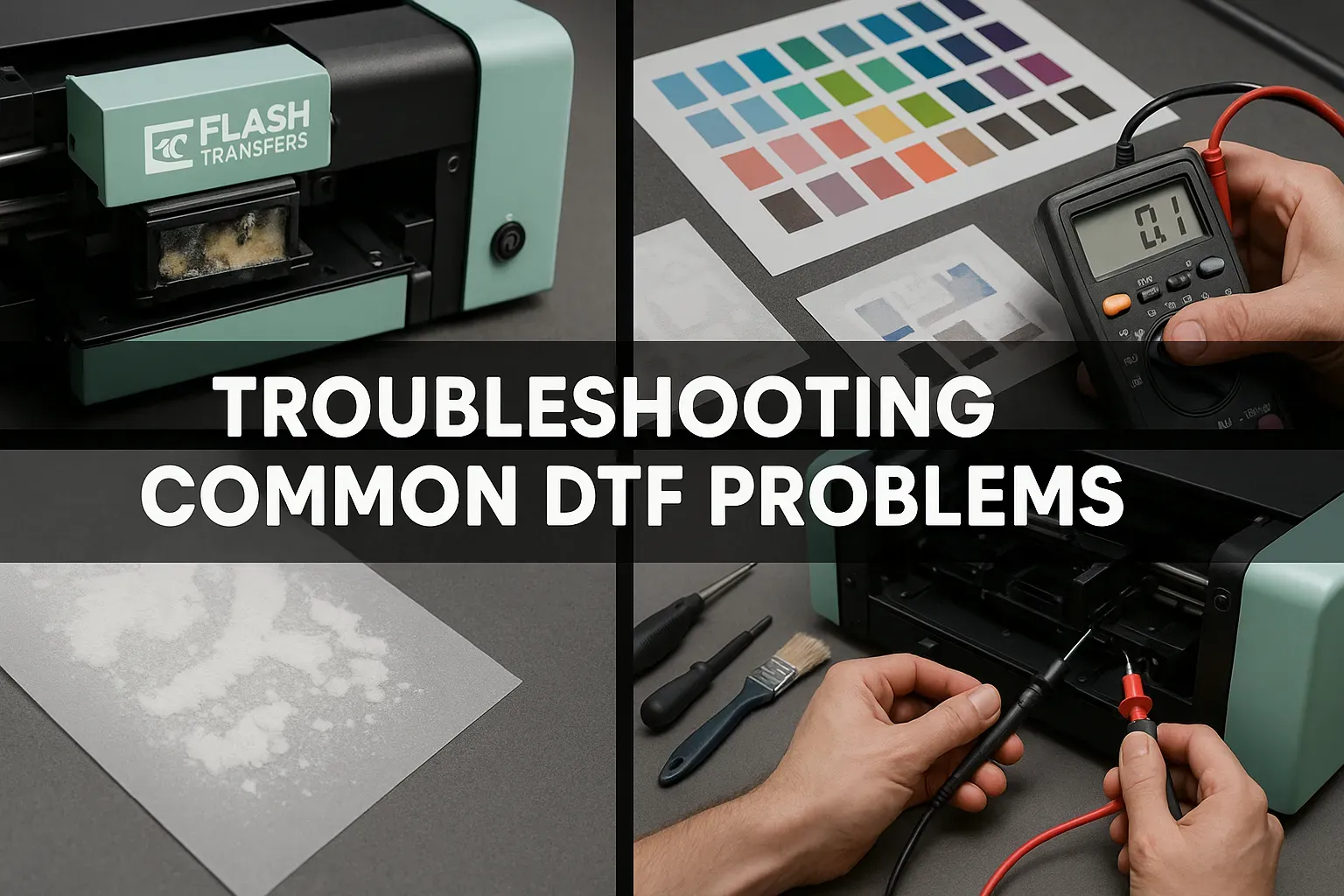
DTF troubleshooting is essential for keeping apparel and accessory production moving smoothly in busy print shops. From misregistration to ink problems, it covers DTF printer troubleshooting with practical, repeatable fixes. You’ll learn step-by-step checks for film adhesion, powder readiness, and heat-press settings aligned with DTF transfer troubleshooting guidelines. Alongside practical DTF maintenance tips, these steps help prevent recurring problems. This helps reduce DTF printing issues and keep production on schedule.
From a semantic perspective, this topic can be framed as optimizing the digital fabric transfer process rather than chasing isolated faults. Related concepts like printer diagnostics, ink delivery consistency, transfer readiness, and coating adhesion all point to a common goal: reliable, repeatable results. Emphasize routine maintenance tips, calibration routines, and color workflow management to prevent drift. By tying practical checks to broader themes such as material compatibility and process controls, you leverage LSI to cover the same territory with varied terminology.
DTF Troubleshooting: A Structured Diagnostic Workflow
A structured diagnostic workflow is the backbone of effective DTF troubleshooting. By following a repeatable sequence, you reduce guesswork and speed up resolution of common DTF printing issues, misreads, and color inconsistencies. This approach aligns with DTF printer troubleshooting practices and supports ongoing DTF maintenance tips to keep equipment reliable.
Begin with a preflight check, then verify printer readiness, and finish with print head and ink management before adjusting media and transfer settings. Treat the workflow as a cycle that stays consistent across models and media, enabling stable color, density, and adhesion across jobs. This foundation helps teams in busy shops deliver predictable results and lower downtime.
Diagnosing Misregistration and Misalignment in DTF Printing
Misregistration and skew are among the most visible DTF printing issues. They are often linked to feed path issues, conveyor belt tension, improper media loading, or carriage misalignment. Heat and vibration during a run can also contribute to misregistration.
Quick fixes include recalibrating the print bed or belt tension, loading film flat and square in the guides, and running a nozzle check and print head alignment test. Clean and lubricate smooth rails as recommended by the vendor, and print a small calibration design to verify alignment before scaling up.
Resolving Color Shifts, Density Variations, and White Ink Problems
Color shifts and density variation arise from inconsistent ink delivery, miscalibrated color profiles, or changes in temperature and humidity. These DTF ink problems can distort color and reduce repeatability across runs.
Reprint color calibration targets and recreate the ICC profile for the media. Shake and mix ink cartridges gently and ensure no air bubbles in the lines. Verify the print head height matches the recommended range, and run cleaning cycles if bands appear. If issues persist, inspect dampers and print head connections for clogs and consider printer health as part of DTF maintenance tips.
Improving Powder Adhesion and Transfer Quality on DTF Films
Powder adhesion and transfer readiness problems can ruin transfer quality. Uneven powder application, powder clumps, or insufficient curing lead to poor adhesion and incomplete design transfer.
Apply powder evenly using the proper shaker or powder system and remove excess powder with tapping or a controlled air blast. Confirm the pre press stage heat and time are adequate to flatten the film and remove wrinkles. Use the recommended curing times and temperatures for your film and powder combination. These steps help with DTF transfer troubleshooting by improving the consistency of the powder bed.
Maintaining Your DTF Printer: Maintenance Tips and Best Practices
Maintenance matters. A regular maintenance schedule that includes nozzle checks, print head alignment, and ink system health is a central part of DTF maintenance tips. Keeping the printer clean reduces the risk of defects and downtime.
Store consumables at recommended temperatures, calibrate color profiles when changing media or ink batches, and document settings for repeat jobs. Clean internal paths and fans to prevent dust buildup that can affect print quality, and keep a log of settings to support rapid reproduction of successful results.
Escalation and Continuous Improvement: When to Seek Help and Reassess Choices
If issues persist after following the steps above, escalate to manufacturer support or a qualified service technician. Check for firmware or driver updates and consult the device knowledge base for model specific guidance. Escalation is a normal part of DTF printer troubleshooting when hardware is involved.
Reassess consumables to ensure you are using recommended powders, media and inks. Maintain a troubleshooting log to identify recurring patterns and guide future fixes. By adopting a disciplined process and keeping records, you can minimize downtime and maintain consistent DTF printing results across production runs.
Frequently Asked Questions
What are the most common DTF printing issues and how can I troubleshoot them?
DTF printing issues often include misregistration, color shifts, white ink problems, streaks or banding, and transfer quality concerns. Quick troubleshooting: run a nozzle check and print head alignment; recalibrate color profiles for the media; verify film loading and belt tension; clean rails and remove any adhesive residues from the platen; print a small calibration design to confirm alignment before a full job; review heat-press settings for transfer (temperature, time, and pressure). Maintain a simple, repeatable workflow and log results to track recurring issues.
How can I prevent misregistration in DTF transfer troubleshooting and ensure accurate prints?
Misregistration in DTF transfer troubleshooting often comes from feed path issues, belt tension, improper media loading, or carriage alignment errors. To prevent it and ensure accuracy: recalibrate the print bed or belts per the vendor guidelines; load film flat and square with the guides; run a nozzle check and head alignment; clean and lubricate smooth rails; print a calibration design at a small size, then scale up once alignment is confirmed; keep a log of settings for quick replication.
What causes DTF ink problems, particularly white ink issues, and how can I fix them?
DTF ink problems, especially white ink issues, can be caused by viscosity changes, aging or poorly mixed ink, and clogs in white ink channels. Fixes include running a dedicated white ink cleaning cycle and nozzle check for white channels; gently shake ink cartridges (printer off if possible) to avoid air bubbles; monitor humidity and verify viscosity/temperature specs; flush and refill white ink with manufacturer-approved product if clogging persists; ensure CMYK and white ink mix remains compatible.
What quick steps make up a DTF troubleshooting workflow for common issues?
A practical DTF troubleshooting workflow includes: Step 1 pre-flight check—verify color profiles, media profiles, and shelf-life; Step 2 printer readiness—run nozzle check, head alignment, recalibrate color targets, and ensure square media loading; Step 3 print head and ink management—gentle ink shaking, run cleaning cycles, check white ink channels; Step 4 film and powder handling—load film flat, apply powder evenly, inspect coverage; Step 5 transfer and post-press checks—set heat press parameters, pre-press to remove moisture, and allow to cool before evaluating transfer quality.
What maintenance tips are essential to reduce DTF issues in a busy shop?
DTF maintenance tips for a busy shop include creating a regular schedule with nozzle checks, print-head alignment, and ink system checks; store consumables at recommended temperatures to preserve viscosity; clean internal paths and fans to prevent dust buildup; recalibrate color profiles when changing media or ink batches; document settings for different media to reproduce results; monitor environmental conditions to keep the workflow stable.
When should you escalate DTF printer troubleshooting issues to service or consumable replacements?
Escalate DTF printer troubleshooting issues when problems persist after following the quick fixes, such as unresolved misregistration, persistent color shifts, or white ink clogging. Check for firmware or driver updates, consult the manufacturer’s knowledge base, and contact a qualified service technician or authorized repair center for hardware concerns; reassess consumables to ensure powders, media, and inks are recommended for your printer model; if you notice hardware symptoms (no power, motor noise, error codes), escalate promptly.
| Section | Key Points |
|---|---|
| Introduction |
|
| What this guide covers |
|
| Understanding core terms |
|
| Common DTF printing issues and their causes |
|
| Step-by-step quick-fix workflow |
|
| Maintenance tips |
|
| Common mistakes and best practices |
|
| When to escalate |
|
| Conclusion |
|
Summary
DTF troubleshooting is a repeatable diagnostic workflow that helps shops minimize downtime and maximize print quality. By understanding common issues—DTF printing issues such as misregistration, color shifts, white ink problems, and transfer quality—along with practical fixes and maintenance, you can minimize downtime and maximize print quality. The key is to maintain consistent calibration, proper media handling, and careful attention to ink viscosity and powder application. With the strategies outlined in this guide, you’ll be well on your way to reliable, repeatable results in DTF printing, backed by thoughtful DTF maintenance tips and a disciplined troubleshooting routine.