
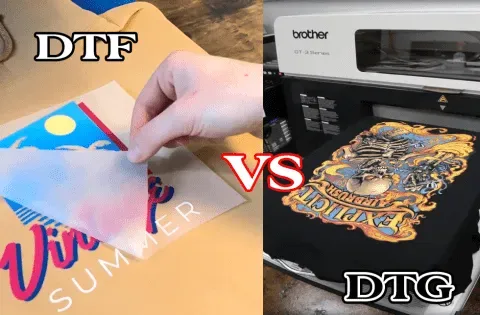
DTF vs DTG is a hot topic for apparel brands evaluating print methods. Understanding DTF printing vs DTG helps designers compare how these approaches affect fabric behavior and output. The choice often hinges on fabric composition, production volume, and finishing steps that influence turnaround. DTF can deliver bold opacity on dark fabrics and broad compatibility, while DTG tends to excel with nuanced color on lighter textiles. The decision should align with business goals and the practical realities of your production line.
Put differently, brands compare film-backed transfers with direct-to-garment printing to achieve the same visual goals through different workflows. Think of it as weighing a heat-press technique with a white underprint against an inkjet-style fabric printer, each offering distinct texture, color behavior, and practical performance. From an LSI perspective, related terms such as substrate compatibility, adhesion quality, and color depth help describe how durability and wash-fastness play out across fabrics.
DTF vs DTG: Understanding the Core Differences
Direct-to-Fabric (DTF) and Direct-to-Garment (DTG) encode two different philosophies for applying ink to fabric. DTF uses a printed transfer film, a bonding powder, and a topcoat before heat application, resulting in a print that sits on top of the fabric and can be used across a wider range of textiles, including dark garments. This approach often emphasizes opacity and color foundation through the white underprint and film layers, which helps achieve bold results on challenging backgrounds.
By contrast, DTG sprays water-based inks directly into the fabric, with printing occurring much like an inkjet process. This method tends to yield a softer hand when paired with proper pretreatment, curing, and fabric selection—especially on cotton-rich blends. In short, the DTG path aligns with fiber-based color fidelity, while DTF emphasizes versatility and robustness across fabrics.
Soft-hand Feel: Which Method Delivers a Softer Touch on Fabric
Soft-hand feel, or the tactile quality of the print, is a major factor in customer satisfaction. DTG often delivers a noticeably softer hand on compatible fabrics because the ink bonds with fibers and sits closer to the surface without a heavy transfer layer, particularly on light fabrics with appropriate pretreatment and curing.
DTF can feel slightly more textured due to the transfer film, bonding layer, and topcoat. The exact hand feel varies with the film thickness, the powder coat, and curing parameters. On darker fabrics, a thin film and lightweight topcoat can help minimize roughness, but some buyers still perceive a marginally stiffer touch compared to DTG on the same textile.
Vibrant Color Reproduction Across Fabrics: DTG vs DTF on Light and Dark Garments
Color reproduction is a core driver of appeal. DTG excels in smooth gradients and nuanced tones on light fabrics, delivering rich, natural-looking color transitions that feel intrinsic to the garment. This makes DTG particularly strong for designs with subtle shading and photographic details on white or light cotton.
DTF shines on dark fabrics and color depth thanks to the white underprint and the adhesive film that builds opacity. The resulting hues tend to pop, with punchy saturation even on black or navy backgrounds. While the color story is bold, the perceived depth comes from the layered transfer approach, which should be validated with fabric-specific testing.
Durability and Wash-Fastness: How Prints Endure Through Repeated Washes
Durability and wash-fastness depend on ink chemistry, curing, and surface texture. DTG durability is typically strong on light fabrics when pretreatment is properly applied and curing conditions are met, but performance can waver on darker fabrics without additional topcoat considerations.
DTF durability benefits from the protective topcoat and the adhesion provided by the transfer film, often delivering robust performance across a range of fabrics. Still, actual wash-fastness hinges on factors like fabric type, wash conditions, and whether the transfer was applied under optimal pressure and timing.
Cost Comparison and Production Efficiency: Where Budget and Speed Meet
Cost implications matter, especially for small runs or single-color designs. DTG tends to have higher per-unit costs due to ink usage, pretreatment requirements, and ongoing printer maintenance, though setup times for small batches can be fast and flexible.
DTF generally offers lower unit costs in higher-volume runs and supports a broader fabric mix. The workflow—printing on film, applying powder, curing, then transferring—adds steps but scales efficiently for multi-fabric catalogs and dark-background work, contributing to favorable cost-per-unit outcomes on larger orders.
Practical Guidance: Choosing the Right Method for Your Fabric, Volume, and Brand
For brands serving frequent small orders and prioritizing soft-hand feel on light fabrics, DTG is often the preferred starting point. It enables natural color on white textiles and quick turnarounds for small runs, with a workflow that favors fiber-centric color fidelity.
For shops needing broad fabric compatibility, bold opacity on dark fabrics, and scalable costs for higher volumes, DTF is a strong contender. A hybrid approach—DTG for light textiles and DTG/DTF interchangeably for other fabrics—can optimize both hand feel and color performance, while keeping production efficient across a mixed catalog.
Frequently Asked Questions
DTF vs DTG: which offers a better soft-hand feel on fabrics?
DTG typically delivers a softer hand on compatible fabrics, especially high-cotton blends, when properly pretreating and curing. DTF can feel slightly more textured due to the transfer film and bonding layer, though using thin films and a light topcoat can minimize this on many textiles.
DTF printing vs DTG: which provides more vibrant color reproduction on dark fabrics?
DTF often yields brighter, more opaque color on dark fabrics thanks to the white underprint and film transfer. DTG can produce rich color on light fabrics with smooth gradients; on dark fabrics, pretreatment and layering are required to achieve opacity.
Durability and wash-fastness: how do DTF vs DTG compare over repeated washes?
DTG durability is strong on light fabrics when the garment is properly pretreated and cured, with wash-fastness improving with correct processing. DTF benefits from a protective topcoat and reliable transfer adhesion, yielding solid wash-fastness across many wash cycles, though outcomes depend on fabric and wash conditions.
Cost comparison: is DTG more expensive per unit than DTF for small runs?
Yes, DTG generally has higher per-unit costs due to ink usage, pretreatment, and printer maintenance, making it pricier for single-color or small runs. DTF often offers lower cost per unit for higher-volume runs and works across more fabrics, though the workflow adds steps that affect throughput.
DTF vs DTG for fabric versatility and hand feel: which should you choose?
DTG shines for a soft-hand feel on 100% cotton or high-cotton blends and light fabrics with natural color gradients. DTF provides broader fabric compatibility (including dark fabrics) and strong color on diverse textiles, making it a solid option for multi-fabric catalogs and promotions.
Which method to choose for high-volume production and cost efficiency: DTF vs DTG for multi-fabric catalogs?
For high-volume runs across varied fabrics, DTF typically offers better cost efficiency and scalability, especially on dark fabrics. DTG can be faster to set up for small batches or designs with complex color mixes, but per-unit costs rise with volume.
| Aspect | DTG (Direct-to-Garment) | DTF (Direct-to-Fabric) |
|---|---|---|
| Soft-hand feel | Tends to deliver a softer hand on compatible fabrics; can feel almost like bare knit on high-cotton blends. | Can feel slightly more textured due to the transfer film and bonding layer; feel varies with film thickness and topcoat. |
| Color vibrancy and reproduction | Excels in color gradients on light fabrics; smooth transitions and natural look. | Shines on dark fabrics thanks to white underprint and film; punchy, opaque colors on dark backgrounds. |
| Durability and wash performance | Strong wash-fastness on light fabrics with proper pretreatment and curing. | Durability benefits from a protective topcoat; strong adhesion but depends on fabric, wash conditions, and transfer parameters. |
| Fabric compatibility | Best on 100% cotton or high-cotton blends; poly blends may require pretreatment for consistency. | Broader fabric range (including polyester blends and dark fabrics) due to white underlay and film transfer. |
| Cost, speed, and production considerations | Higher per-unit cost for small runs or single-color prints; quick setup for small batches. | Lower cost-per-unit for high-volume runs; involves multiple steps (film, powder, cure) but scales well across fabrics. |
| Production workflow and quality checks | Pretreatment and precise curing; monitor for mottling and even color density. | Film transfer, bonding powder, curing, and topcoat care; ensure even adhesion and uniform topcoat to avoid texture. |
| Ideal use cases / Best fit | Small batches, soft hand, gradient color on light fabrics. | Dark fabrics, broad fabric compatibility, bold opaque colors, and scalable volume. |
Summary
Table created to compare DTG and DTF across key aspects.