
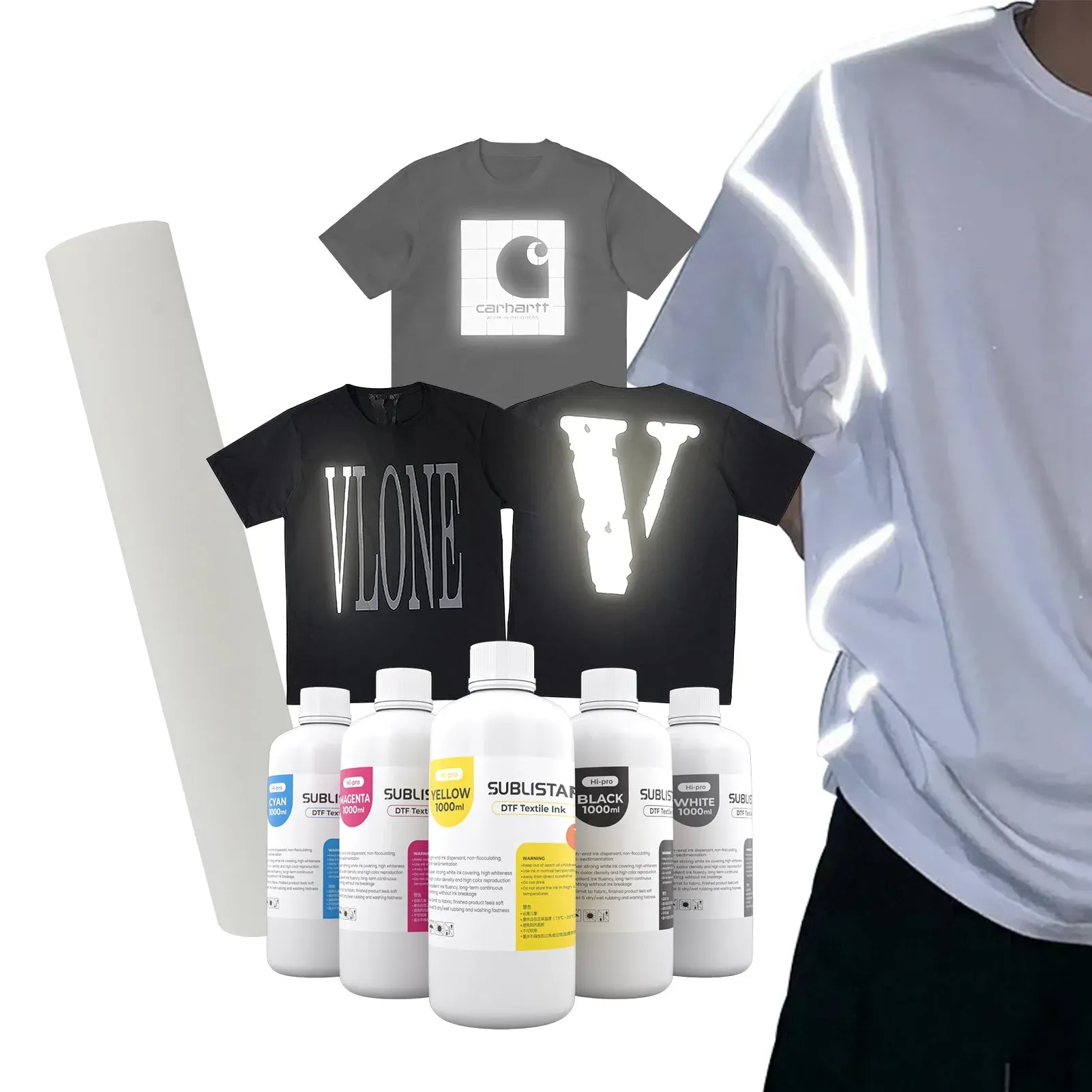
DTF film and ink for durable apparel prints form the foundation of any successful printing operation, from startups to established studios. To maximize results, pay attention to DTF film quality and DTF ink compatibility, because the interaction between film surface, adhesive, and ink chemistry determines color vibrancy and wash-fastness. Choosing the best DTF film for apparel involves testing across fabrics, performing wash tests, and reviewing data sheets to gauge durability and consistency. When you pair a reliable film with a compatible ink set, you’ll notice improved adhesion, reduced reprints, and more predictable print durability across cycles. This guide helps you assess each component and align your workflow to deliver durable, vibrant garments that support DTF printing durability across wear and washes.
For those exploring garment decoration with direct-to-film methods, the focus shifts to transfer media and ink systems that deliver lasting visuals. The film acts as the carrier, while the ink formulation and curing protocol establish color vibrancy, opacity, and wash resistance. When evaluating options, consider substrate compatibility, adhesive performance, and post-press durability to ensure results endure routine wear. Apply LSI-inspired terminology by examining transfer media quality, pigment versus dye inks, white underbase opacity, and colorfast performance across fabrics. This approach mirrors the first paragraph's goals while expanding the vocabulary to cover related concepts that support durable apparel prints.
Understanding DTF Film Quality: Surface, Adhesive, and Thermal Stability
DTF film quality is not just a price tag or a thickness spec. It encompasses surface smoothness, release properties, adhesive compatibility, and dimensional stability during the curing process. A high-quality film reduces silvering and edge lifting, helps ensure even ink transfer, and supports reliable adhesion across fabrics, all of which contribute to stronger, longer-lasting prints.
When evaluating film quality, request material data sheets and look for independent wash-durability and colorfastness test results. A film that performs well across cotton, polyester, blends, and performance fabrics is more likely to yield durable apparel prints than a cheaper option with limited testing.
DTF Ink Compatibility and Color Longevity: Matching Ink to Film and Fabric
Ink compatibility is the other half of the durability equation. The ink must work cohesively with the film’s adhesive system, the printer’s head technology, and the garment substrate. Ink performance directly affects color vibrancy, opacity, and how well the design endures washing and daily wear, making compatibility a priority in any durable print strategy.
Consider pigment-based inks for better colorfastness across a wider fabric range, while dye-based inks may require careful pre-treatment and post-processing to reach similar durability. White ink performance is especially critical on dark fabrics, so assess brightness, cover power, and consistency when testing ink sets for long-term print durability.
The Best DTF Film for Apparel: Criteria for Comfort, Detail, and Durability
Choosing the best DTF film for apparel hinges on practical criteria: fabric compatibility (cotton, polyester, blends, performance fabrics), print resolution and detail retention, adhesive strength and re-wettability, dimensional stability, and overall cost-per-transfer. A film that ticks these boxes supports durable prints without compromising workflow.
During shopping, request samples and run controlled tests across your most common garments. Develop a simple scoring system—adhesion, color accuracy, ease of use, and wash durability—to compare options. The best DTF film for apparel is the one that consistently delivers durability while fitting your production needs.
DTF Printing Durability: From Cure to Wash: How to Lock in Longevity
Printing durability begins with optimized print settings, accurate color management, and robust curing. Calibrate resolution and ink density to achieve solid coverage without over-saturating the film, and ensure that the transfer parameters (dwell time, temperature, pressure) suit each garment type. Proper curing is essential to maximize adhesion and resist cracking or color fading.
Post-press care and wash guidelines are equally important. Allow sufficient cooling and curing to set the adhesive, and provide end-users with care instructions that minimize harsh detergents and high-heat drying cycles on newly printed items. Proper washing practices significantly extend DT printing durability and preserve the print’s integrity across multiple wear-and-wash cycles.
DTF film and ink for durable apparel prints: Practical Evaluation and Optimization
This section emphasizes a system-level approach where film quality and ink compatibility work together. The goal is to identify a pairing that delivers consistent color reproduction, strong adhesion, and reliable wash durability across your fabric range. Think of it as optimizing both components as a single, cohesive solution rather than as separate parts.
Develop a practical evaluation protocol: run side-by-side tests on multiple fabrics, monitor color stability after simulated washes, and document results with a simple scoring rubric. Use these findings to refine your ink set, pressing parameters, and curing steps, converging on the most durable and repeatable results.
Printing, Curing, and Post-Print Care: Steps to Maximize Durability Through Workflow
A robust workflow starts with pre-press fabric prep, ensuring fabrics are clean and dry, followed by calibrated print settings that balance color coverage with film behavior. Gentle but effective pre-pressing reduces moisture and helps the adhesive set evenly, supporting long-term durability.
Finally, post-print care and end-user washing guidance play a pivotal role. Provide clear care instructions (cold wash, gentle cycle, air dry) and avoid high-heat drying for the first few washes. When the printing, curing, and care steps are aligned, you achieve higher DTF printing durability and garments that withstand regular wear and washing while maintaining color and detail.
Frequently Asked Questions
How does DTF film quality affect the durability of DTF film and ink for durable apparel prints?
DTF film quality affects surface smoothness, release properties, adhesive compatibility, and thermal stability. A high quality film promotes even ink transfer and reliable adhesion, reducing silvery edges, cracking, and wash-fastness issues. When paired with a compatible ink set, this combination yields more durable apparel prints with vivid color fidelity.
What is DTF ink compatibility and why is it critical for the durability of DTF film and ink for durable apparel prints?
DTF ink compatibility refers to how well the ink chemistry interacts with the film adhesive layer, printer head technology, and garment substrate. Pigment based inks generally offer stronger color fastness and wash durability on a wide range of fabrics, while white ink brightness and proper curing are essential for longevity.
What is the best DTF film for apparel to maximize printing durability?
Best DTF film for apparel depends on fabric compatibility, adhesion strength, release cleanly, and dimensional stability. Look for films with proven wash durability across common fabrics and request samples to test in your workflow. Evaluate adhesion, color accuracy, and wash performance to select the best DTF film for apparel for your line.
How can I test DTF printing durability when evaluating a DTF film quality and ink compatibility?
To test DTF printing durability, run side by side prints on representative fabrics, then perform standardized wash tests. Evaluate color fastness, adhesion near seams, and white ink opacity after multiple cycles. Use the results to compare film quality and ink compatibility across your chosen combinations.
What steps in printing, curing, and post-press care maximize DTF printing durability when using DTF film quality and ink compatibility for durable apparel prints?
Key steps include pre-press fabric prep, calibrating printer and color management, optimizing transfer parameters, and thorough curing. Post-press cooling and clear care instructions to end users help maximize durability and wash life for durable apparel prints.
What common pitfalls reduce DTF printing durability and how can I avoid them when pairing DTF film quality with ink compatibility?
Common pitfalls include inconsistent adhesion on dark fabrics, color bleed, cracking after washing, uneven transfers at seams, and stiff hand after curing. Avoid them by ensuring proper white ink opacity, verifying adhesive activation, calibrating color profiles, using correct curing conditions, and testing across fabrics before large scale production.
| Area | Key Points |
|---|---|
| DTF Film Quality and Its Impact on Durability | - Surface smoothness and microtexture influence even ink transfer; rough films can cause color shifts and incomplete fills.n- Release properties should allow clean transfer with no residue; inconsistent release can cause scorching or edge lift.n- Adhesive compatibility to textiles (cotton, polyester, blends, activewear) must be reliable to avoid adhesion failures.n- Thermal stability ensures prints withstand heat press dwell times without warping, preserving detail and lifespan.n- When evaluating, request data sheets and independent wash/durability tests for a proven performance baseline. |
| DTF Ink Compatibility and Color Longevity | - Pigment inks often offer better colorfastness and wash durability across fabrics; dye inks may require extra pre/post processing.n- White ink brightness and coverage are crucial for readability on dark fabrics.n- Ink compatibility with the film affects adhesion, color clarity, and abrasion resistance.n- Proper curing is essential to achieve full adhesion and wash durability; under-curing can lead to cracking or fading, especially on poly-based fabrics.n- Test ink-film combinations with multiple fabrics and standardized wash tests to identify a robust, repeatable set. |
| Choosing the Best DTF Film for Apparel | - Fabric compatibility: ensure film works well on cotton, polyester, blends, and performance fabrics; some films excel on natural fibers but underperform on synthetics.n- Print resolution and detail retention to preserve fine lines and gradients.n- Adhesive strength and re-wettability for secure printing and clean release during handling.n- Dimensional stability to reduce edge curling and misregistration in multi-color designs.n- Cost-per-transfer and yield; consider waste, curing time, and overall durability benefits.n- Practical testing: request samples and run controlled tests; use a simple scoring system (adhesion, color accuracy, ease of use, wash durability) to pick the best option. |
| Printing, Curing, and Post-Print Care for Durability | - Pre-press and fabric prep to remove oils and improve adhesion; light pre-press helps set adhesive.n- Print settings: optimize resolution, ink density, and color management to ensure solid coverage without oversaturation.n- Transfer parameters: use appropriate dwell time, temperature, and pressure for the film and garment type.n- Post-press care: allow cooling and curing to set the adhesive; avoid harsh detergents and high-heat drying for the first wash.n- Wash/care guidelines: provide end-users with precise instructions (cold water, gentle cycle, air dry) to maximize durability. |
| Common Pitfalls and How to Avoid Them | - Inconsistent adhesion on dark fabrics: adjust white ink opacity and adhesive activation; pressing protocols may vary by film.n- Bleeding or color migration: calibrate color profiles and ink density to prevent over-saturation.n- Cracking after washing: verify curing time/temperature and adequate pressing; select films with good elongation and compatible inks.n- Uneven transfer on seams/collars: maintain consistent pressure and consider pre-pressing seams or longer dwell times for multi-layer areas.n- Post-wash stiffness: balance ink coverage to retain fabric hand; test densities to avoid a stiff feel. |
| Evaluation and Testing Approach | - Document results with a simple scoring system: adhesion, color accuracy, ease of use, wash durability.n- Run side-by-side tests across common fabrics and designs; perform standardized wash tests to gauge long-term performance.n- Use data-backed criteria to select the best pairing for your range, aiming for consistency and reduced reprints. |
Summary
Conclusion content will follow in descriptive style to summarize the topic and reinforce the key takeaway: selecting the right DTF film and ink is essential to achieving durable apparel prints across fabrics and wash cycles. The goal is to treat the film-ink system as an integrated solution, supported by data-backed testing and iterative refinements to consistently deliver vibrant, long-lasting garments.